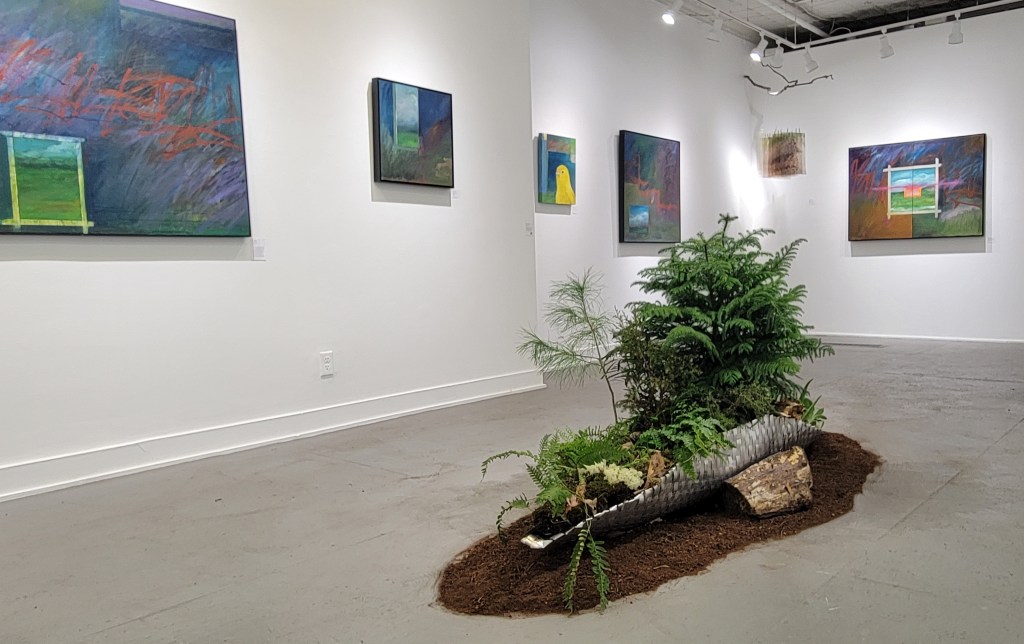
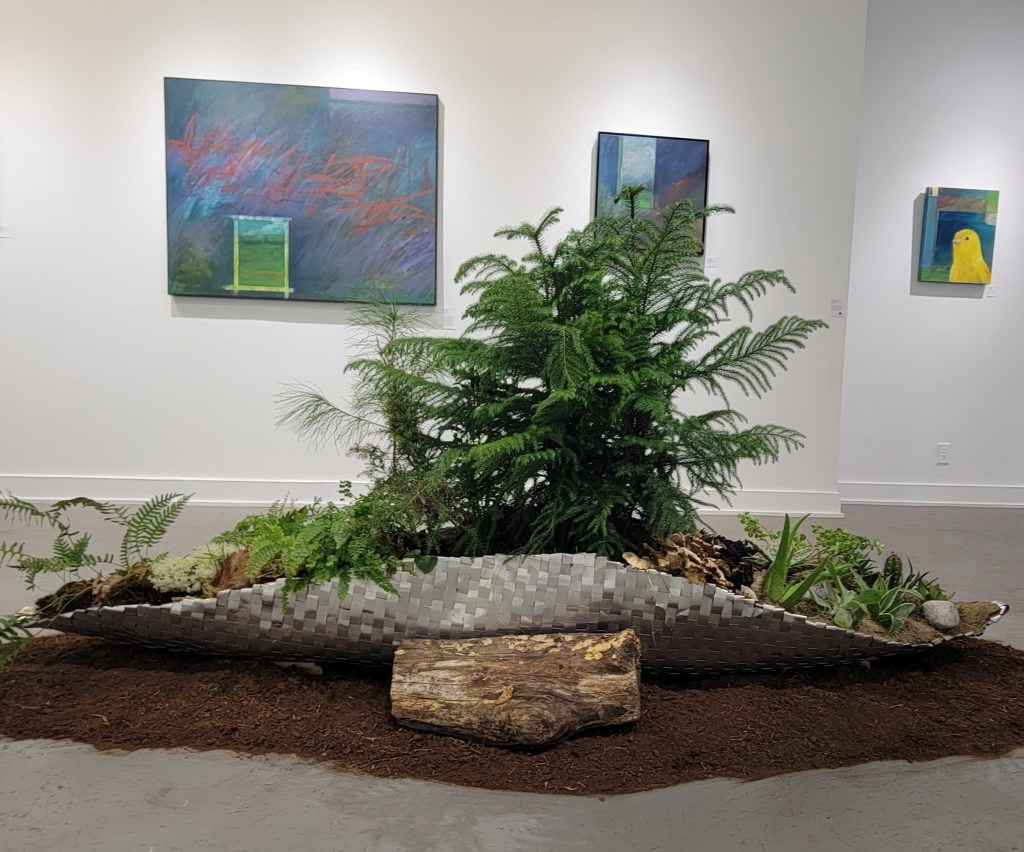
Altered Futures, 2024. Galvanised aluminium, living plants (including trees, grass, ferns, moss, fungi, lichen, cacti, succulents), sand, pebbles, soil, peat moss, wood, thread, brass rods, bass wood, chicken wire. Dimensions variable (approximately 24 in width x 88 in length x 36 in height)
Altered Futures is a multi-media installation that explores what happens to the natural world beyond extreme environmental and climate-related displacements. The possible natural worlds presented in Altered Futures show a mix of plants including evergreens, lichen, cacti and succulents that may or may not survive in our warming planet. These worlds consider the possibilities for growth and regeneration suggesting that whatever happens life on earth will persist, though different from what we imagine.
The impacts of climate change will be unevenly distributed. Some areas may receive rain far in excess of normal levels whilst others may become desiccated with extreme temperatures. The three natural worlds presented in Altered Futures suggest what could be possible in a future world after the impact of the current climate crisis: evergreen forest, desert and a fungal and lichen-scape. These vibrant landscapes move past despair to suggest that a future exists and that we have some agency in choosing how to get to a place we may want to live in.
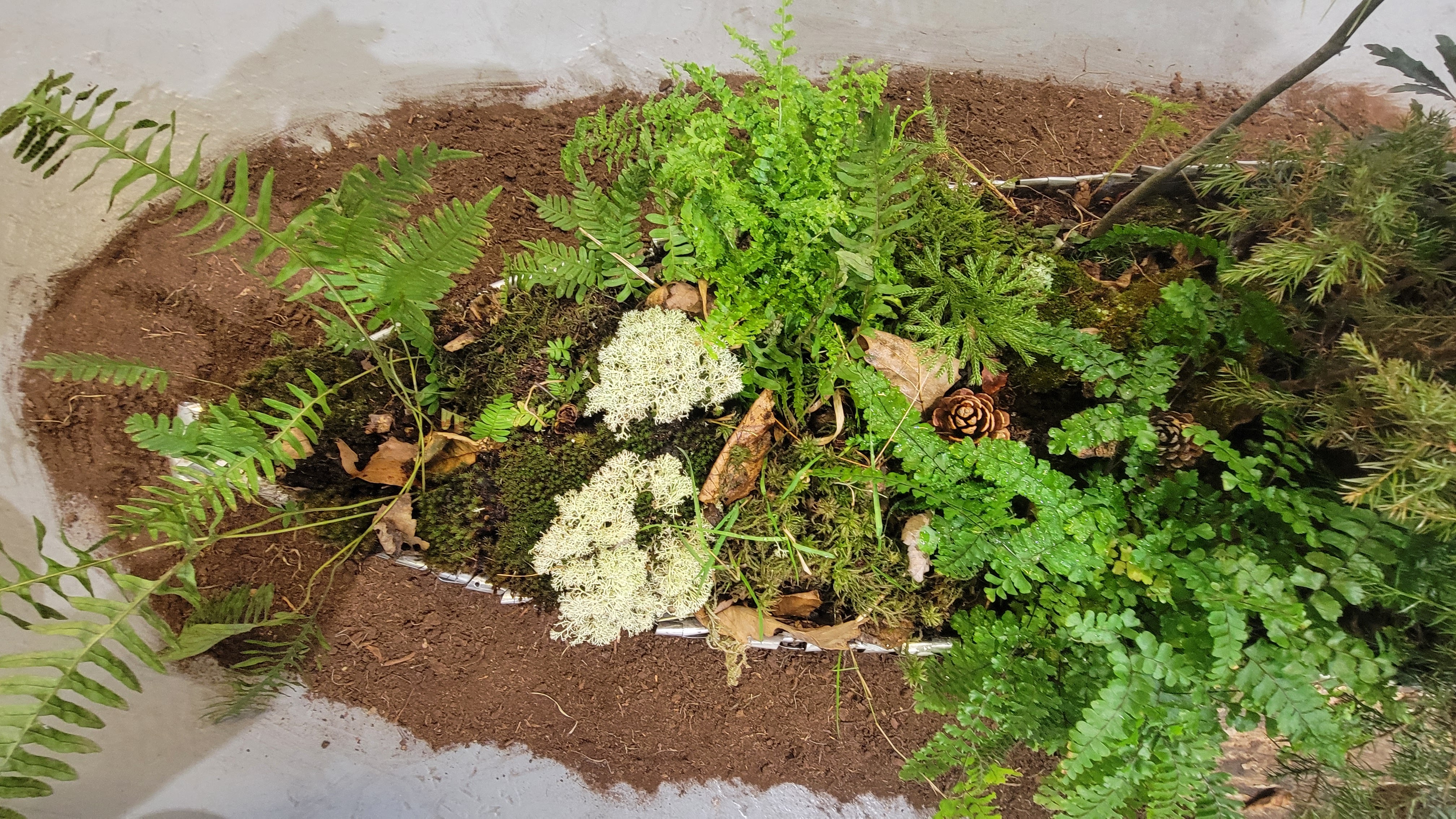
An evergreen forest is different from the temperate deciduous forests that are typically found in the Northeastern US where I currently live. This choice reflects the planet’s warming, as these forests typically exist where monthly mean temperatures are 70oF. Ferns, moss, lichens, pines and other plants create a biodiverse future forest-scape.
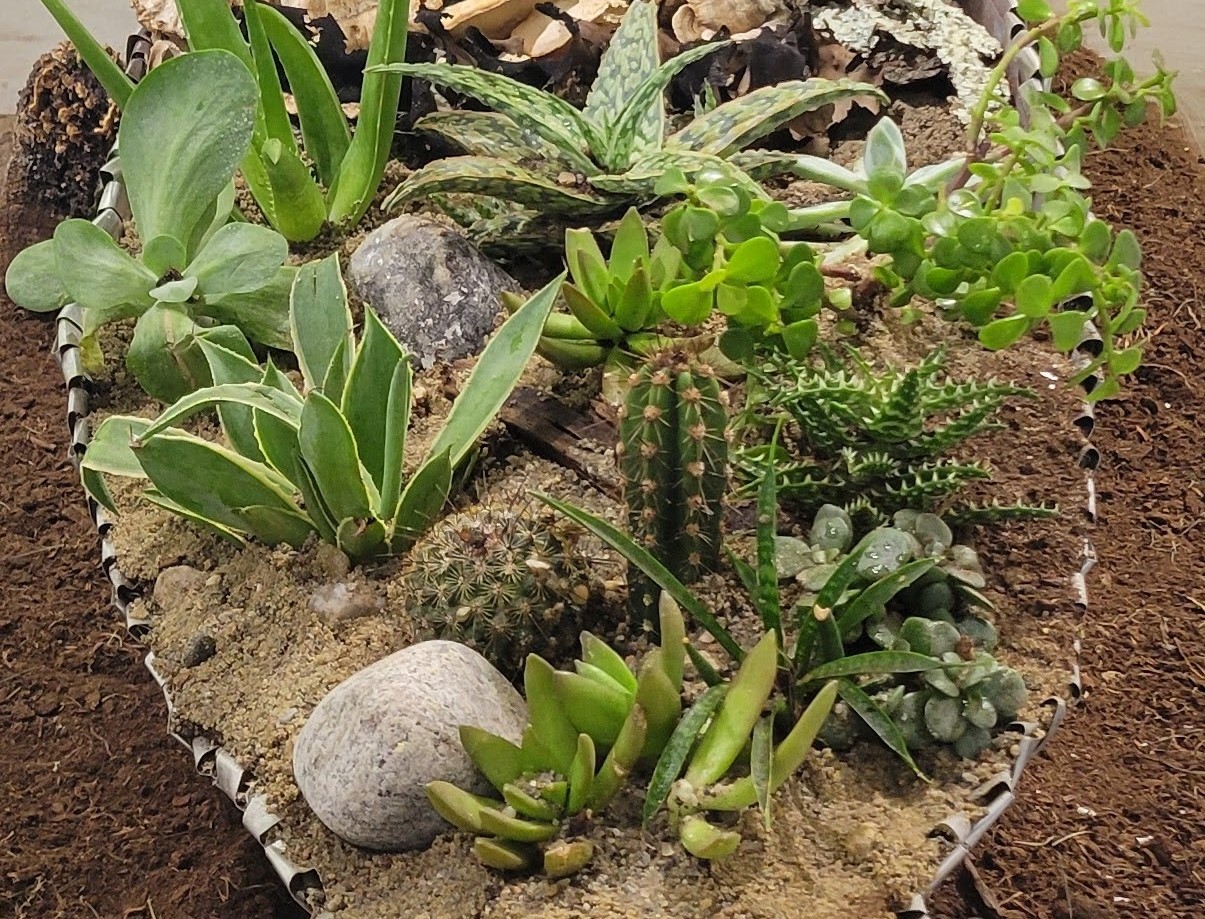
Deserts are one type of dry, high temperature landscape, though some have cold all year round or seasonally. Receiving little rain, often less than 10 inches annually, these landscapes still support vibrant ecosystems with diverse plant and animal life. The desert scape in Altered Futures shows a variety of cacti and succulent plants illustrating that even in extreme hot, arid places survival and biodiversity are possible.
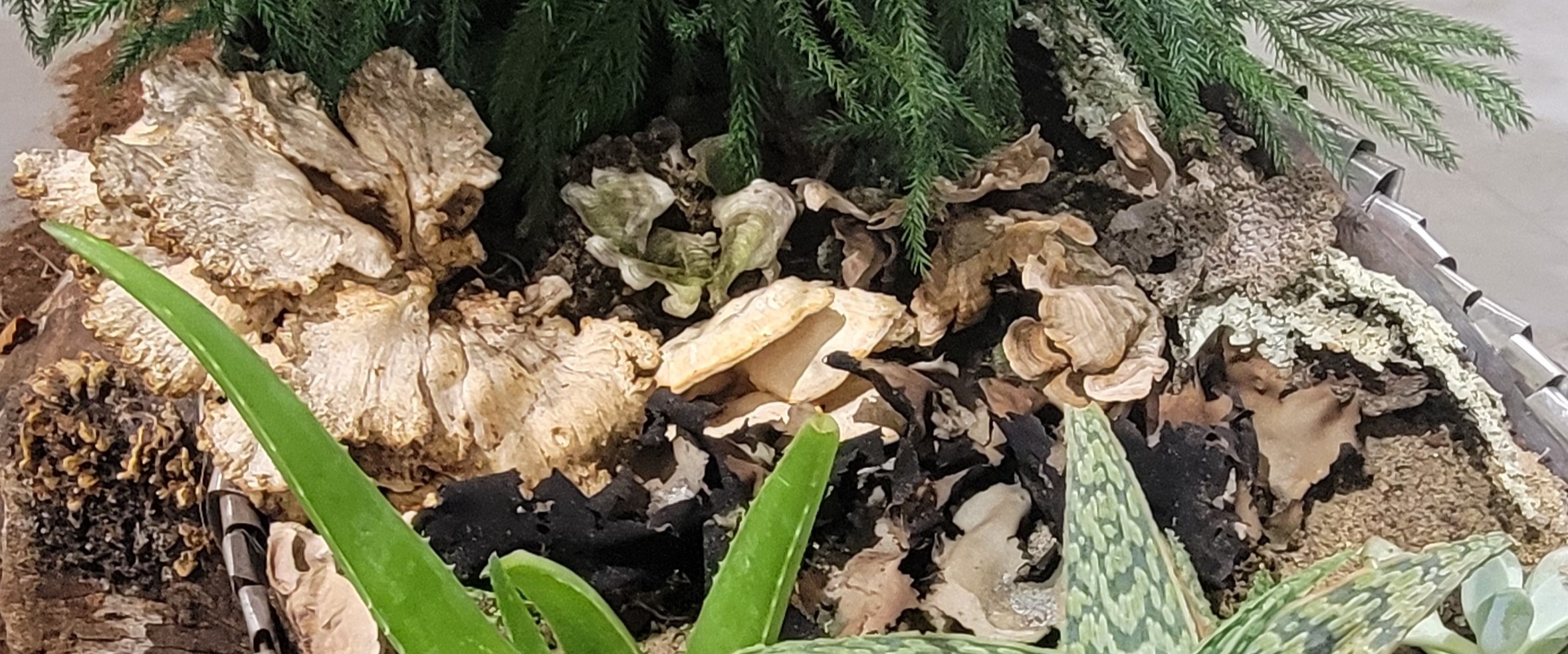
A fungal and lichen-scape provides a segue from the forest to the desert. Lichens are a combination of fungi and cyanobacteria or algae coexisting symbiotically. They are one of the most resistant living organisms to extreme conditions and are often, the first living organism to show up after a disaster. The lichens harvested for this exhibit had just endured two months of no rain and were dry and brittle. This short time lapse video shows the rapid rehydration of one of these lichens, a Smooth Rock Tripe, umbilicaria mammulata, illustrating their resilience under adverse environmental conditions.
Fungi are abundant, diverse and the main decomposers of organic matter and fundamental recyclers of nutrients in many ecosystems. In Altered Futures, the fruit from several fungi are represented but in reality their vast structures are often underground or in the dead matter that they decompose. Fungi are an ancient organism, one fossil record is as old as 2,400 million years ago, suggesting their ability to endure extreme planetary events.
Ecologies of Weaving, Care and Sympoeisis
These future possibilities are presented in a woven boat which acts metaphorically as a vessel of futurity. The practice of weaving the boat was an embodied exercise in imagining a world where repair and hospitality or care could happen in profound ways. Weaving, an ancient practice, can help us to repair the damage that has been done to our world and ourselves. One invitation for the viewer is to imagine new possibilities for care. How might we weave our future together with the biodiversity that we have?
Sympoeisis, from Donna Haraway, is defined as “making with” the beyond human. I have worked in kinship with the natural world to make Cosmic Pond and Altered Futures. I use a practice of care and radical imagination to generate these works. Radical imagination is needed so that we can address current precarities. Care is a practice that is essential for our future. Specifically in this work, care is important because, once harvested and placed within the work, these living organisms require tending and watering. For example, the moss has to be watered daily in the gallery because it has no vascular structure to store or move water and will dry out.
Radical imagination, care and connection allow me to listen and attend to what the plants offer in this work. They are part of the process because I have no way of knowing the exact final results. I have a vision for the work and the plants help me realise that vision. They teach me many things. For example, the rehydration of the lichen showed me their incredible resilience to extreme dry conditions (see this short time lapse video). The more I work in this way the deeper my understanding becomes for the vital importance of working with our broader world and specifically the beyond human to find ways to address our contemporary challenges
As recent extreme weather has shown, climate change is already changing our landscapes. Altered Futures suggests that the beyond human offers vibrant potentialities for surviving whatever comes. The broad diversity of life shows multivariate intelligences that provide us with many partners and possibilities. We know that many of these species have survived for millions of years and will hopefully survive for millennia more. At the same time, radical imagination, care, weaving and sympoeisis show a way to reconfigure a world that might evolve for all.
 Maria Markham